
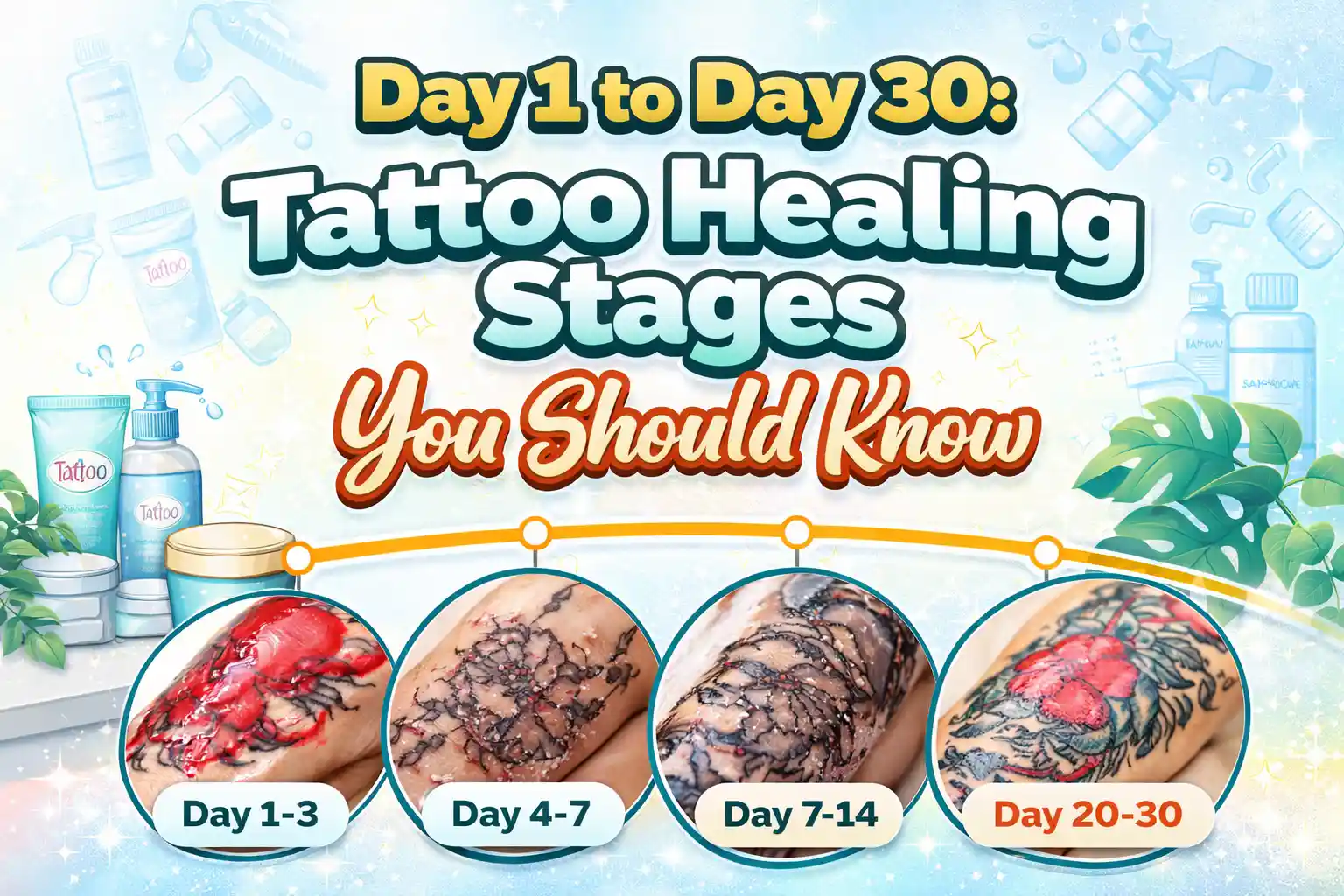
Tattoo healing follows a natural timeline that your skin moves through step by step. From redness and sensitivity in the beginning to peeling, itching, and finally smooth, settled skin—each phase has its own signs and care needs.
Understanding tattoo healing stages from day 1 to day 30 helps you avoid common mistakes, reduce discomfort, and keep your tattoo looking clean and well-defined. At Tattoo Gleam, we break this process down in a simple way so you know exactly what’s happening under your skin.
Day 1–3: Initial Healing Phase
The first few days are when your skin reacts most strongly. The tattooed area may feel warm, tight, and slightly swollen. You might also notice a mix of fluid and ink on the surface.
What to expect:
- Redness and swelling
- Sensitivity to touch
- Slight oozing or moisture
- Shiny or wet appearance
Care tips:
- Clean gently without scrubbing
- Keep the area dry and breathable
- Avoid unnecessary touching
One mistake people make at this stage is overdoing hygiene. Washing too frequently or too aggressively can irritate the skin. If you’re unsure, read about over-cleaning to understand how it can affect healing.
Day 4–7: Peeling and Scabbing Begins
As your skin starts repairing itself, you’ll notice peeling and light scabbing. This is a normal stage where the outer layer begins to shed.
What to expect:
- Flaking or peeling skin
- Small, light scabs
- Itching starts
- A tattoo may look dull
What to avoid:
- Scratching or picking
- Tight clothing over the tattoo
- Excess moisture
Even though it may look uneven during this phase, this is part of the healing process. Pulling at scabs can remove ink and affect the final look.
If your tattoo feels tight or uncomfortable, you may notice a dry feeling, which is common during this stage.
Day 7–14: Itching and Skin Renewal
During the second week, your tattoo enters a more stable phase. The peeling slows down, but itching may become more noticeable. A thin layer of new skin forms over the tattoo.
What to expect:
- Increased itching
- Dry or slightly rough texture
- The tattoo appears cloudy or faded
Care tips:
- Apply a light moisturizer when needed
- Keep the tattoo clean and protected
- Avoid direct friction
This stage often confuses people because the tattoo doesn’t look as sharp as before. The clarity will return as healing continues.
Day 14–20: Surface Recovery
At this point, most visible healing is complete. The tattoo looks smoother, and the skin feels more normal. However, deeper layers are still recovering.
What to expect:
- Reduced itching
- Smoother texture
- Slight dullness may remain
Important reminder:
Even if your tattoo looks healed, it’s still sensitive. Activities like intense workouts can still irritate. Before resuming routines, it’s helpful to understand gym visit risks during healing.
Day 20–30: Final Healing Stage
By the end of the first month, your tattoo should appear more settled and clear. The outer skin has healed, and most discomfort is gone.
What to expect:
- Even skin texture
- Sharper tattoo appearance
- No more peeling or itching
Ongoing care:
- Protect from sunlight
- Maintain basic skin hydration
- Avoid harsh products
Sun exposure can still damage your tattoo even after it looks healed. Learning about sun exposure helps you prevent fading and protect your ink.
Factors That Affect Healing
Tattoo healing doesn’t follow the same timeline for everyone. Several factors can influence how quickly and smoothly your skin recovers.
Skin Type
Some people experience more dryness or sensitivity, while others heal faster.
Placement
Areas with more movement or friction may take longer to heal.
Environment
Weather conditions like heat, humidity, or cold can impact your tattoo. If you travel, understanding climate impact can help you adjust your aftercare.
Aftercare Routine
Consistency is key. Following a proper aftercare guide helps reduce risks and supports steady healing.
Common Healing Mistakes
Avoiding simple mistakes can make a big difference in how your tattoo turns out.
- Overwashing the tattoo
- Using scented or harsh products
- Picking or scratching peeling skin
- Ignoring dryness or irritation
- Exposing the tattoo to direct sunlight
Each of these can slow healing or affect the final appearance.
Signs of Normal Healing
It’s normal to feel unsure during the healing process. Here are signs that your tattoo is healing properly:
- Redness fades gradually
- Peeling happens in small amounts
- Mild itching without pain
- Skin improves over time
If your experience matches these signs, your tattoo is on the right track.
When to Pay Attention
While most tattoos heal without issues, certain signs may need attention:
- Persistent swelling
- severe pain after several days
- Unusual discharge
- Bad odor
If you notice any of these, it’s best to get professional advice.
Final Thoughts
Tattoo healing stages from day 1 to day 30 follow a clear pattern, even though the experience may feel different for each person. Knowing what to expect at each stage helps you stay prepared and avoid unnecessary stress.
At Tattoo Gleam, the focus is on making tattoo care simple and practical. By understanding your skin’s healing process and following the right steps, you can support a smooth recovery and keep your tattoo looking its best.
Healing takes time, but with the right approach, the results are worth it.