August 9, 2026
In This Article
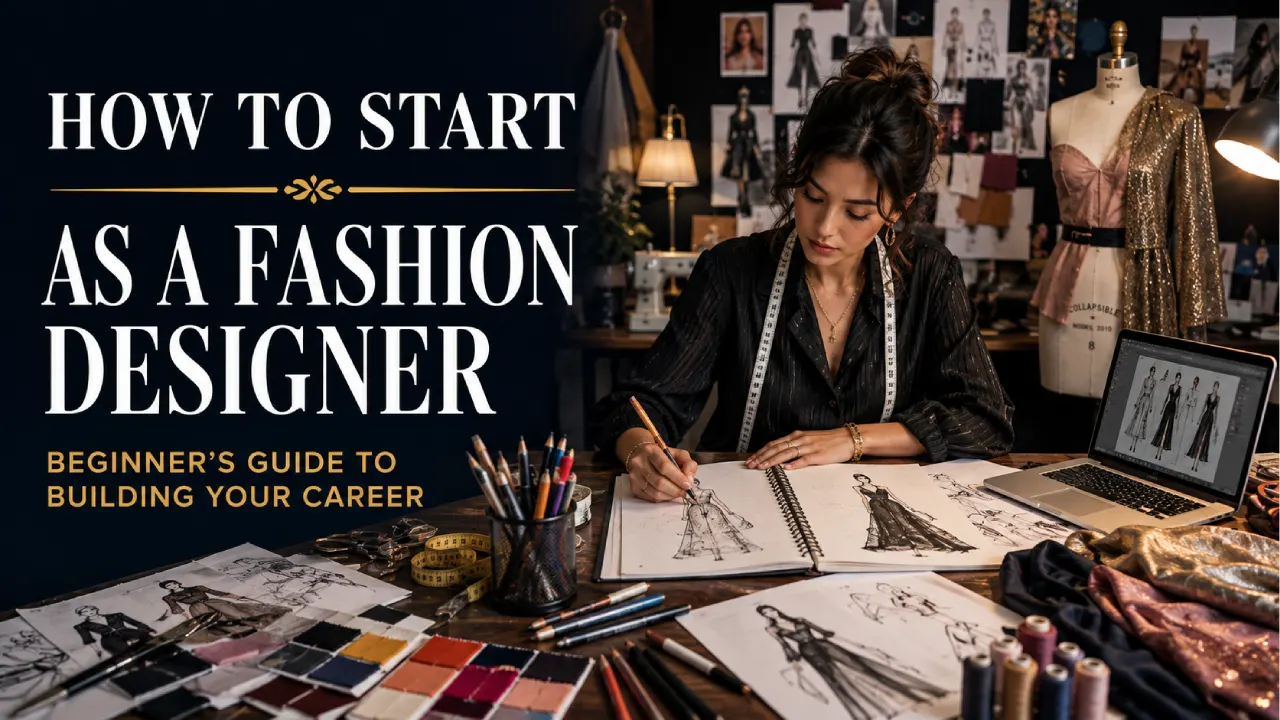
If you love clothing, sketching, fabrics, colors, and the idea of turning creative ideas into something people can actually wear, fashion design can be an exciting career path. But getting started involves much more than having a good sense of style. You need creative vision, technical skills, a strong portfolio, practical experience, and a clear understanding of how the fashion industry works.
The good news is that there is no single route into fashion design. A fashion degree can provide structured training and industry exposure, but motivated aspiring designers can also build their skills independently. Whether you choose school, self-directed learning, or a combination of both, the goal is the same: learn the craft, create strong work, and put that work in front of the right people.
| Main Role | Create clothing, accessories, or footwear concepts and help turn them into finished products |
| Core Skills | Creativity, sketching, sewing, patternmaking, CAD, communication, and attention to detail |
| Education | Fashion design degree, courses, apprenticeship, or self-directed training |
| Portfolio | A focused collection of your strongest sketches, concepts, technical work, and finished pieces |
| Experience | Internships, assistant roles, freelance projects, personal collections, or hands-on practice |
| Career Options | Fashion houses, apparel brands, costume design, independent labels, freelance design, or your own brand |
| Best First Step | Start designing regularly while learning the technical fundamentals of garment creation |
Before deciding how to enter the industry, it helps to understand what fashion designers actually do. Their work begins with ideas but usually extends far beyond drawing attractive outfits.
Fashion designers develop concepts for clothing, accessories, or footwear. They may research trends, create mood boards, sketch ideas, select fabrics and colors, develop patterns, create prototypes, and work with manufacturers or other members of a design team.
Depending on the role, a designer may also use computer-aided design software, visit fabric suppliers, attend trade shows, present collections, work with patternmakers, review samples, and help oversee production.
There are also many different directions within fashion. You might focus on womenswear, menswear, childrenswear, accessories, footwear, costumes, activewear, bridal fashion, sustainable clothing, or another specialized area.
The first real step is learning how to design. You do not need to know everything on day one, but you should steadily develop both your creative and technical abilities.
Drawing is one of the simplest ways to train your design eye. Practice silhouettes, proportions, garments, details, accessories, and complete looks. Do not worry about making every sketch perfect. Regular practice matters more in the beginning than creating a masterpiece every time.
A designer does not necessarily have to sew every garment personally, but understanding construction makes your ideas much stronger. Learn basic stitches, seams, fabrics, patternmaking, draping, fitting, and how different materials behave.
Modern fashion designers increasingly work with digital tools. Learning software such as Adobe Illustrator and Photoshop, along with relevant CAD systems, can help you create technical drawings, develop patterns, visualize garments, and communicate ideas professionally.
Follow designers, fashion houses, collections, historical garments, fabrics, cultural influences, and current trends. The goal is not to copy what is popular. It is to understand why certain designs work and gradually develop your own perspective.
Formal education is one established route into fashion design. Degree and specialized programs can teach subjects such as textiles, fashion illustration, garment construction, patternmaking, design theory, fashion history, and digital design.
A structured program can also give you access to instructors, classmates, equipment, critiques, projects, and opportunities to develop a portfolio. For someone who learns best in a classroom environment, that structure can be valuable.
However, formal education is not the only option. Short courses, workshops, apprenticeships, online classes, books, tutorials, and independent practice can all contribute to your development.
The important question is not simply whether you have a degree. It is whether you can demonstrate that you know how to develop an idea and turn it into a strong, realistic design.
Yes. A degree can be useful, but it is possible to pursue fashion design without formal college education. The trade-off is that you must take responsibility for learning the skills that a structured program would normally provide.
If you choose the self-taught route, create a learning plan rather than randomly watching tutorials. Study design fundamentals, practice sketching, learn sewing and patternmaking, experiment with fabrics, learn digital design software, and create actual prototype pieces.
You should also study the business side of fashion. Learn basic costing, sourcing, production, branding, marketing, and how fashion products reach customers. These skills become especially important if your long-term goal is to launch your own label.
For self-taught designers, the portfolio becomes particularly important. Your work needs to demonstrate what you can actually do rather than relying on educational credentials alone.
Your portfolio is one of the most important tools you will have when applying for design opportunities, internships, freelance projects, or fashion programs.
A good portfolio should show more than finished drawings. Show how you think. Include research, mood boards, color palettes, fabric choices, sketches, design development, technical drawings, prototypes, and photographs of finished garments when available.
Quality is more important than filling the portfolio with every project you have ever created. Select work that represents your strongest abilities and supports the type of fashion role you want.
You should also consider creating a digital version. An online portfolio makes it easier to share your work with potential employers, collaborators, clients, and industry contacts.
Learning in isolation can only take you so far. Try to get as close to the real fashion process as possible.
Internships and assistant positions can introduce you to professional workflows and help you understand how designers, patternmakers, manufacturers, merchandisers, buyers, photographers, and creative teams work together.
You can also create your own experience. Design a small capsule collection, make prototypes, collaborate with a local tailor or seamstress, create costumes for a production, work on alterations, or take on small freelance projects.
Every real project teaches you something that a sketch alone cannot. You learn how fabrics behave, how garments fit, how long production takes, what mistakes cost, and how an idea changes when it meets practical limitations.
One of the biggest challenges for a new designer is developing a recognizable point of view. Fashion is full of talented people, so simply following trends will not make your work memorable.
Your design voice is the combination of your visual preferences, creative influences, technical choices, values, and the type of customer you want to serve.
Start by creating mood boards and keeping a design journal. Collect references that genuinely interest you and look for patterns in your choices. Maybe you repeatedly choose certain silhouettes, materials, colors, historical influences, or construction details.
Then experiment. Create multiple versions of the same concept. Change the fabric, proportion, color, construction, or styling. The goal is to discover what feels uniquely yours.
Fashion is a collaborative industry, and relationships can open doors that a portfolio alone may not.
Attend fashion shows, exhibitions, trade events, workshops, talks, and creative-industry gatherings. Introduce yourself, ask thoughtful questions, and learn about the people working in areas that interest you.
Online communities can also be useful. Follow designers and brands, participate professionally in relevant discussions, and share your own work without turning every interaction into a sales pitch.
When you meet someone in the industry, focus on building a genuine relationship. A strong network is not simply a list of contacts. It is a group of people who know your work, understand your interests, and may think of you when an opportunity appears.
Your online presence can function as a public extension of your portfolio. Create a simple website or digital portfolio where people can quickly understand who you are, what you design, and what kind of work you want to do.
Social platforms can also help you document your progress. Share sketches, fabric experiments, prototype development, finished garments, behind-the-scenes work, and parts of your creative process.
Consistency is more useful than trying to make every post go viral. Over time, a well-organized online presence can show potential employers and collaborators that you are serious about fashion design and actively developing your craft.
Once you have developed your skills and built a portfolio, start looking at the different career paths available to you.
If you want to launch your own brand, start small. A focused collection can teach you about sourcing, manufacturing, pricing, marketing, inventory, customer feedback, and sales without requiring you to produce an enormous range of products immediately.
Many aspiring designers focus heavily on the creative side and overlook the practical parts of the profession. Avoid these common mistakes:
If the process feels overwhelming, break it into smaller steps. You do not need to build an entire fashion career in a month.
Days 1–30: Learn the fundamentals. Practice fashion illustration, study fabrics, begin learning sewing and patternmaking, research designers, and experiment with digital design tools.
Days 31–60: Start developing your portfolio. Choose a concept, create a mood board, develop several designs, experiment with fabrics and construction, and produce at least one prototype if possible.
Days 61–90: Polish your portfolio, photograph your work, create an online presence, attend an industry event, contact potential mentors or employers, and begin applying for internships, assistant roles, freelance opportunities, or relevant programs.
The exact timeline will vary from person to person, but the principle is simple: learn, create, document, connect, and repeat.
How do I get started as a fashion designer?
Start by learning fashion illustration, garment construction, sewing, patternmaking, fabrics, and digital design tools. Then create projects, build a strong portfolio, gain practical experience, network with people in the industry, and apply for entry-level opportunities.
Do I need a degree to become a fashion designer?
No. A fashion degree can provide structured training and industry connections, but it is possible to become a fashion designer without one. Self-taught designers need to independently develop the technical skills, portfolio, practical experience, and professional connections needed to compete in the industry.
What skills should a beginner fashion designer learn?
Important skills include fashion sketching, creativity, sewing, patternmaking, fabric knowledge, garment construction, CAD and digital design, communication, trend research, attention to detail, and basic business knowledge.
What should be included in a fashion design portfolio?
A strong portfolio can include mood boards, research, sketches, color palettes, fabric choices, technical drawings, design development, prototypes, finished garments, and high-quality photographs. Choose work that reflects your strongest abilities and your desired design direction.
How can I get fashion design experience without a job?
Create your own collections and prototypes, collaborate with other creatives, take freelance projects, volunteer for productions, assist experienced designers, attend workshops, and look for internships. Personal projects can also become valuable portfolio pieces when they demonstrate real design and construction skills.
Can I start my own fashion brand as a beginner?
Yes, but it is usually smarter to begin with a focused collection rather than trying to produce a large range immediately. Start by understanding your target customer, developing a clear design identity, testing products, researching production, calculating costs, and learning how to market your work.
How important is networking for fashion designers?
Networking can be very valuable because fashion is a collaborative industry. Industry events, internships, workshops, online communities, and professional relationships can introduce you to employers, collaborators, mentors, clients, and other opportunities.
Disclaimer: This article is for informational and educational purposes only. Career requirements can vary by employer, location, specialization, and experience level. Always research the current requirements for the specific fashion design role or program you want to pursue.
TattooGleam Editorial Team
tattoogleam.com