September 8, 2026

Business moves quickly in 2026. Orders arrive, payments are processed, inventory changes, customers send messages, and reports need to stay updated. When all of this information is handled through slow or separate systems, even a growing business can quickly become difficult to manage.
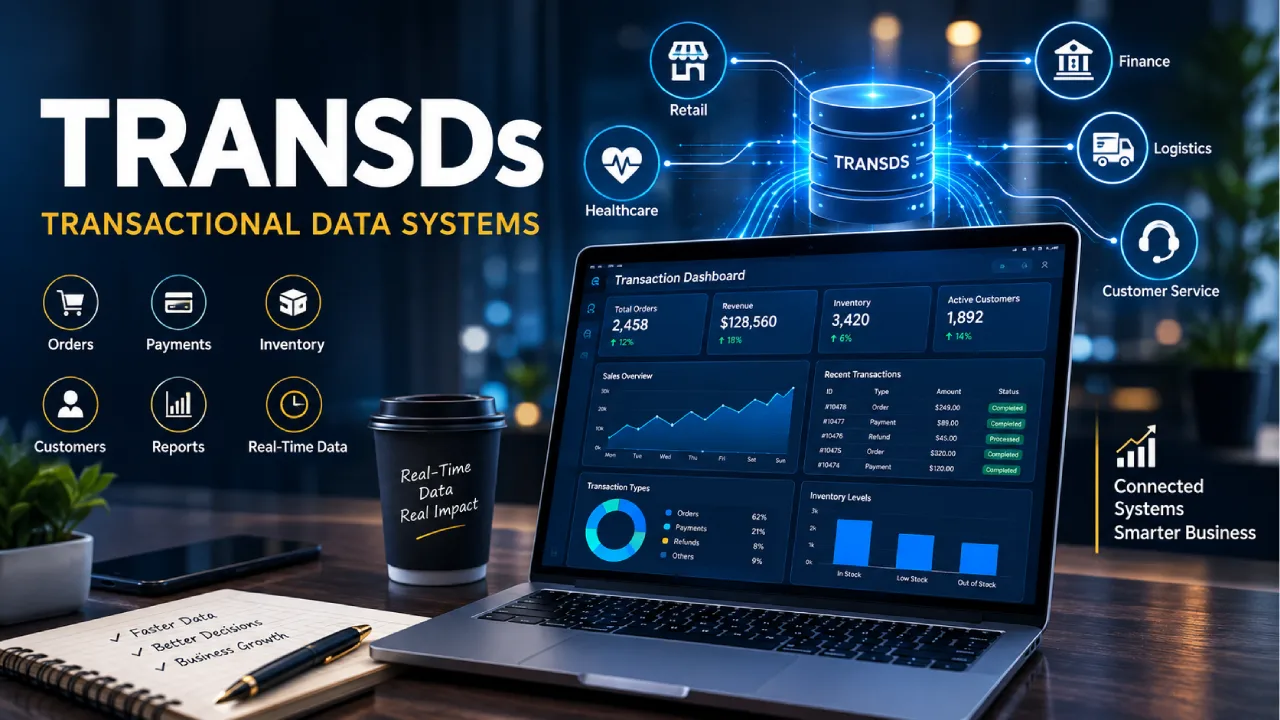
This is where Transds comes in. In simple terms, Transds refers to Transactional Data Systems that help businesses collect, process, update, and share important information as business activity happens.
The idea is simple: instead of letting important information sit in separate files or outdated systems, Transds keeps data moving between the places that need it. That can help teams respond faster, reduce mistakes, and understand what is happening across the business.
In this guide, we will explain what Transds means, how it works, where businesses use it, its main benefits and challenges, and how AI is making real-time business data even more useful.
Transds is a simple way to describe Transactional Data Systems. These systems manage information created through daily business transactions and activities.
A transaction can be something as simple as a customer placing an order, making a payment, returning a product, booking a service, or sending a support request. Each activity creates information that another part of the business may need.
A Transds system helps collect that information and move it to the right place. For example, when a customer purchases the last item in stock, the system can update the inventory while also recording the sale and sending the necessary information to other business processes.
This makes Transds different from simply storing information. The goal is not only to keep data but to help businesses use current information while work is happening.
Businesses today cannot afford to rely completely on outdated information. Customers expect quick answers, teams need accurate numbers, and managers need to make decisions without waiting for yesterday’s report.
Transaction processing systems are already a major part of modern business technology. IBM explains that transaction processing systems are designed to manage business transactions while maintaining speed, data integrity, availability, and security.
This explains why the idea behind Transds is becoming more important. Businesses want systems that can keep operational information current and available to the people who need it.
For example, an online store may suddenly receive hundreds of orders during a weekend promotion. If inventory information is delayed, the business may continue selling products that are no longer available. With faster transaction processing, stock and order information can be updated much sooner.
The easiest way to understand Transds is to think about a continuous flow of business information.
First, information enters the system. It could come from an online store, payment system, mobile application, booking form, point-of-sale system, or customer service platform.
Next, the system processes the information. It checks what happened, updates the relevant records, and sends information to the systems or people that need it.
Finally, the updated information becomes available for reporting, customer service, inventory management, financial tracking, or other business activities.
For example, imagine a customer buying a product online. The payment is completed, the order is recorded, inventory decreases, the shipping team receives the order, and the customer gets a confirmation. These connected actions depend on accurate transaction data moving through the business.
A practical Transds setup usually involves several connected parts. Each part has an important role in keeping business information accurate and useful.
This is where information enters the system. Inputs can include orders, payments, customer forms, bookings, inventory changes, or support requests.
After information enters the system, it needs to be processed. The system checks and updates the relevant records so the latest activity is reflected correctly.
Transaction information also needs to be stored safely. Businesses may need those records later for reporting, customer support, accounting, or analysis.
Businesses need more than raw data. They need information they can understand. Dashboards, reports, alerts, and summaries can turn business activity into useful information for teams and managers.
Many businesses use several software platforms. A useful data system can connect information between sales, customer service, finance, inventory, cloud tools, and other business applications.
One of the most important ideas behind Transds is real-time data. Real-time data means information becomes available for processing and analysis soon after it is created.
This matters because old information can lead to poor decisions. If a manager sees yesterday’s inventory instead of today’s inventory, the business may order too much, order too little, or disappoint customers.
Real-time data can also improve customer service. A support employee can see current order information instead of asking another department for an update.
Modern real-time data systems are increasingly used to support fast decisions, operational monitoring, dashboards, and AI applications. IBM notes that real-time data can help organizations respond more quickly to changing conditions and support real-time analytics.
Growth creates more data. A small business may handle a few orders and customers each day, while a larger company may process thousands or millions of transactions.
As activity increases, manual updates become harder to manage. Employees may have to copy information between systems, check multiple spreadsheets, or wait for reports. These processes can create delays and mistakes.
Transds helps businesses create a more connected flow of information. When important updates happen automatically, employees can spend less time entering information and more time serving customers and solving problems.
Better data also helps managers plan growth. They can review sales activity, customer behaviour, inventory movement, and other operational information before making important decisions.
For a broader look at how smart systems can support modern work, you can also read our guide to smarter digital work systems .
Inventory is one of the clearest examples. When products are sold, returned, or received, the inventory record needs to change. Faster updates help businesses understand what is available and what needs to be reordered.
Businesses need accurate information about payments and purchases. Transaction systems can process payment activity while maintaining records that support accounting and reporting.
Customer support becomes easier when employees can access current order, payment, and account information. Instead of asking customers to repeat information, teams can work from the latest available records.
Transds can also support reporting by providing current operational data. Managers can use this information to understand sales, customer activity, inventory, and other important business areas.
Businesses interested in customer-focused technology can also explore our article about smart customer experience systems .
Transactional data systems can support many industries because almost every modern organization handles transactions and changing information.
Retailers can use transactional data to manage orders, payments, returns, inventory, and customer activity. Real-time updates are particularly useful when product demand changes quickly.
Healthcare organizations handle appointments, billing information, records, test results, and other operational data. Keeping information organized and current can help teams work more efficiently.
Banks and financial companies process large numbers of transactions. Speed, accuracy, security, and data integrity are especially important in this environment.
Online stores depend on connected transaction information. An order can involve payment processing, inventory updates, shipping information, customer notifications, and reporting.
The biggest advantage of Transds is that it helps businesses work with fresher information. That can lead to faster decisions and smoother operations.
Microsoft also notes that connected analytics tools can bring data from multiple sources into a more unified view, helping organizations prepare information and make better business decisions.
Transds can provide major benefits, but implementing a transactional data system is not always simple.
Integration is one challenge. Older software may not connect easily with newer platforms. A business may need additional tools, APIs, or technical work to make different systems communicate properly.
Training is another issue. Employees need to understand how the new system works and how it changes their daily tasks. Without proper training, even a good system can be difficult to use effectively.
Security also matters. Transactional systems may handle valuable customer and business information. Access controls, secure authentication, monitoring, backups, and sensible data-handling practices should therefore be part of the implementation plan.
Cost can also be a concern. Businesses should compare the cost of a new system with the time, errors, delays, and missed opportunities created by inefficient processes.
AI makes transactional data even more useful because AI systems need relevant information to identify patterns and support decisions.
For example, a retailer could use transaction data to identify products that sell faster on certain days. A finance company could analyze transaction patterns for unusual activity. A customer service team could use current information to route requests more efficiently.
The basic relationship is simple: Transds helps keep business information moving, while AI can help analyze that information and identify useful patterns.
IBM notes that AI in business is increasingly used for areas such as workflow automation, forecasting, customer experience, cybersecurity, and real-time decision-making.
If you want to explore the wider role of AI in digital work, our article about smart automation and changing digital systems provides another useful perspective.
The future of Transds is closely connected to the broader move toward real-time business operations. Companies increasingly want to know what is happening now instead of waiting for end-of-day or weekly reports.
Cloud platforms, connected applications, automation, data streaming, and AI are making it possible to use business information more quickly.
This means transactional systems will likely become more connected and intelligent. Businesses may increasingly combine transaction processing with analytics and AI so that systems can not only record what happened but also help teams understand what may happen next.
Recent Microsoft guidance on real-time analytics highlights the growing importance of turning live data into immediate insights and action. That direction fits naturally with the business goal behind Transds: keeping information current and useful.
Transds refers to Transactional Data Systems. In simple terms, these are systems that help businesses collect, process, update, and share information created through daily transactions and business activities.
Transds is important because businesses need current and accurate information to operate efficiently. Faster data updates can help teams respond to customers, manage inventory, process transactions, and make better decisions.
Not exactly. A database can store information, while a transactional data system focuses on processing and updating information as business activities happen. Transaction processing systems are designed around reliable and timely business transactions.
Retailers, ecommerce companies, healthcare organizations, financial businesses, logistics companies, and many other organizations can benefit from systems that process and update transactional information.
Transds helps move and update transaction information as business activity occurs. This can give teams a more current view of orders, payments, inventory, customers, and other operational information.
Yes. Transactional data can provide useful inputs for AI systems. AI can analyze patterns, identify unusual activity, support forecasting, and help businesses make faster decisions using current information.
Common challenges include integration with older software, implementation costs, employee training, data security, and making sure the system actually solves the business problems it was introduced to address.
Transds is ultimately about helping businesses manage the constant flow of transactional information. Orders, payments, inventory changes, customer activity, and other events create data every day. Businesses need that information to move quickly and accurately to the places where it is needed.
A strong transactional data system can help reduce manual work, improve visibility, support better teamwork, and give managers a clearer picture of business activity.
The biggest opportunity comes when transactional systems work alongside real-time analytics and AI. Instead of simply recording what happened, businesses can use current data to understand patterns, identify problems, and respond faster.
As businesses continue becoming more digital, connected, and data-driven, the need for fast and reliable transaction processing will only become more important. That is why Transds is becoming an increasingly useful concept for understanding how modern businesses manage information.