September 8, 2026

In This Article
Every SaaS founder eventually hits the same fork in the road: build the product with an in-house team, hand it to an outsourcing partner, or lean on AI coding agents to ship it themselves. The right answer isn’t universal — it depends on your stage, runway, and how fast you need to learn whether anyone wants what you’re building. Here’s the honest 2026 breakdown.
The build-vs-buy question used to have two answers. In 2026 it has three, and the third one — building with AI coding agents — has changed how the other two get chosen. It isn’t really a preference question. It’s a stage question: what does your SaaS startup need to prove right now, and how much runway do you have to prove it? Our automation coverage tracks how these tools keep shifting that calculus.
In-house hiring means engineers on your payroll, embedded in your culture, aligned full-time with your roadmap. Outsourcing means handing scoped work to an external agency or dedicated team that bills hourly or by milestone. Building with AI means a founder or small team uses AI coding agents and no-code platforms to generate, test, and ship the product directly, with little or no external headcount. Each path trades speed, cost, and control differently — and none of them is free of risk.
Full control, deep product context, and intellectual property stays internal. But it’s the slowest and most expensive path to start, with fixed payroll that runs whether or not a feature shipped that month.
Faster to start than hiring, no payroll or benefits overhead, and access to specialist skills you don’t have internally. The trade-off is coordination overhead and less institutional memory once the contract ends.
The cheapest and fastest way to test a hypothesis — often days, not months. Great for MVPs and validation, but complex logic, security-critical features, and scale still tend to need experienced human review.
Team structure changes your effective hourly burn rate more than almost any other decision you’ll make early on. According to a 2026 SaaS development cost breakdown, a US-based in-house team typically runs $150–$220 per hour once salary, benefits, and overhead are factored in, while an offshore outsourced team can run $25–$60 per hour for comparable skill — roughly a threefold difference for the same scope of work. It’s a similar logic to what we found when we broke down POS system costs for small businesses — the sticker price rarely tells the full story.
AI-assisted building changes the math again. A small team using AI coding agents alongside a SaaS boilerplate can keep total tooling costs under $100 a month while approaching the output previously associated with a much larger team, which is part of why the cost gap between outsourcing and hiring has widened rather than narrowed, per Craxinno’s 2026 outsourcing analysis.
| Model | Typical Cost | Time to Start | Best For |
|---|---|---|---|
| In-House Team | $150k–$230k/engineer/year | 45–62 days average | Post product-market fit, long-term scaling |
| Outsourced / Dedicated Team | $25–$90/hour | 1–3 weeks | Scoped builds, specialist skills, launches |
| AI-Assisted / No-Code | Under $100/month tooling | Days | Idea validation, MVPs, solo founders |
| Hybrid (most common in 2026) | Blended, scales with stage | Varies | Founders who outgrow a single model |
In-house hiring earns its cost once you’re past validation and into scaling. If your product has confirmed demand, if compliance and data security are non-negotiable — think fintech or healthtech — or if engineering is genuinely your core competency, a dedicated internal team pays for itself over time through accumulated product context.
The catch is speed and attrition risk. Hiring a single senior engineer in a competitive market can take one to three months, and when a key hire leaves, they take undocumented product knowledge with them. In-house is a commitment, not a shortcut — treat it as one.
Outsourcing is the pragmatic middle path: faster than hiring, more capable than AI alone for complex, security-sensitive, or highly custom features. It fits well when you need to launch in weeks rather than months, when you need a specialist skill — AI/ML, cloud infrastructure, compliance — that nobody on your team has, or when you can’t yet justify permanent payroll. Our guide to choosing the right software development partner covers the same vetting logic in more detail.
The risk sits in reliability: outsourced IT projects fail outright at meaningful rates and a large share run over on budget, scope, or timeline, according to Smicolon’s 2026 decision-framework analysis of Standish Group and McKinsey data. Vet vendors carefully, ask for itemized quotes, and keep architectural decisions documented so you’re never fully dependent on one partner.
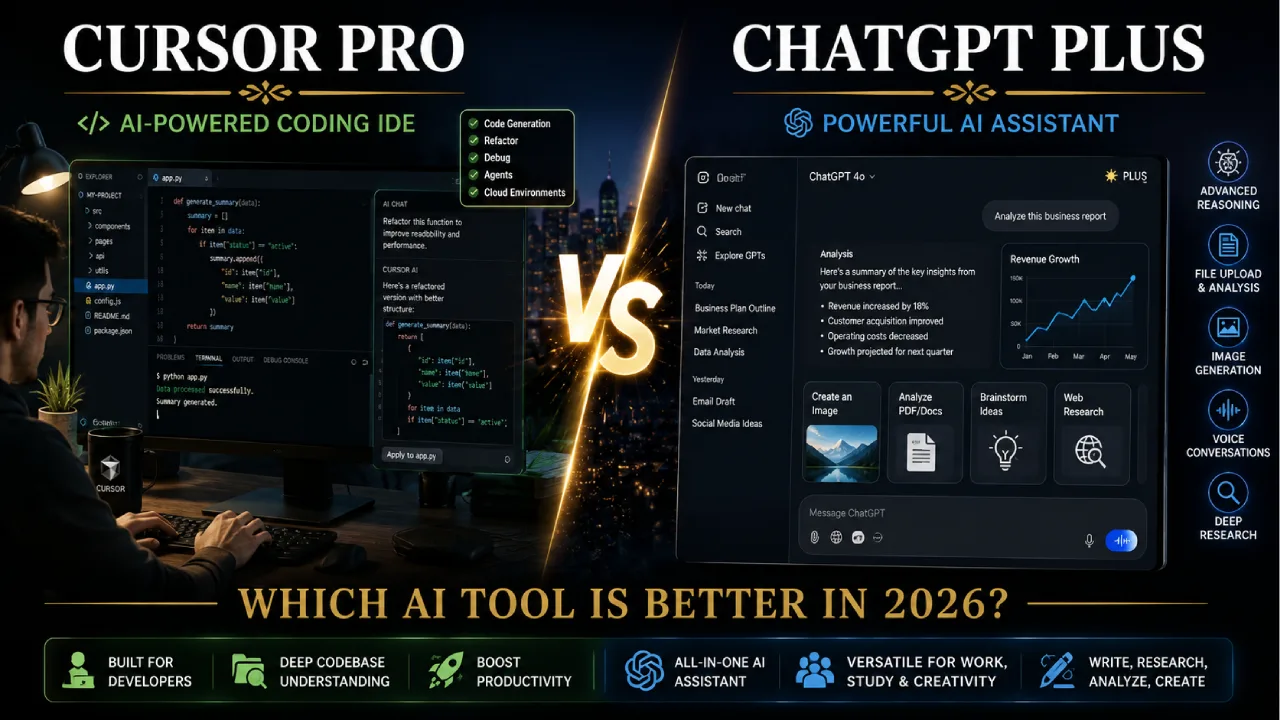
Building with AI coding agents — often paired with a SaaS boilerplate — has become a legitimate first step rather than a novelty. It’s the fastest, cheapest way to find out whether your core hypothesis holds before you spend real money proving it wrong. If you’re picking between assistants, our Cursor Pro vs ChatGPT Plus comparison breaks down which tool fits which kind of build work, and our look at automation solutions for service businesses shows the same AI-first pattern playing out beyond pure software.
AI agents don’t replace engineering judgment; they compress it. They’ve narrowed the productivity gap between senior and mid-level developers by roughly 40% and now handle a large share of routine implementation work, freeing human attention for architecture and product decisions — a shift documented in Engipulse’s 2026 report on AI coding agents and startup CTOs. The limitation shows up once you need advanced conditional logic, multi-agent orchestration, or hardened security — that’s usually where AI-built MVPs graduate into outsourced or in-house builds.
Maya had a clear idea for a niche invoicing SaaS aimed at freelance designers, but no engineering background and roughly six months of runway saved from consulting work. Hiring felt premature — she hadn’t validated that anyone would pay yet — and a full outsourced build quote came back at $40,000, more than half her available runway.
Instead, she spent three weeks using an AI coding agent alongside a prebuilt SaaS starter kit to ship a working MVP: authentication, one core invoicing workflow, and Stripe billing. Total spend was under $200 in tooling. She onboarded twelve paying freelancers in the first month.
Once usage data showed people wanted deeper accounting integrations she couldn’t confidently build alone, she brought in a small outsourced team for that specific feature — not a full rebuild, just the piece that needed specialist skill. Hiring in-house is still on her roadmap, but only once monthly recurring revenue justifies the first full-time engineer. Her sequencing — AI to validate, outsource to extend, hire to scale — is close to what most successful 2026 founders describe when asked how they’d do it again.
Before comparing rates, define the question your next build cycle needs to answer. If it’s “does anyone want this,” you’re in validation mode — lean toward AI-assisted or no-code building, where you can test in days instead of months. If it’s “can we scale this to enterprise customers,” you’re past validation and the calculus shifts toward outsourcing or hiring.
In-house hiring is a fixed monthly cost regardless of output — appropriate once revenue or funding covers it comfortably. Outsourcing lets you pay for defined scope without long-term commitment. AI tooling carries almost no fixed cost at all. As a rule of thumb: the less runway you have relative to your build timeline, the further you should lean toward AI and outsourcing over hiring.
Not every feature deserves the same build method. Core, security-sensitive, or highly custom logic usually benefits from experienced human review — whether that’s an in-house engineer or a vetted outsourced specialist. Routine CRUD features, dashboards, and standard integrations are increasingly well-suited to AI-assisted building. Most SaaS products in 2026 end up as a blend rather than one method applied everywhere.
The three options are converging rather than competing. Outsourcing firms are building AI agents directly into their delivery process, which is part of why their per-hour economics keep improving relative to in-house hiring. In-house teams are using the same AI coding agents internally, effectively doing more with smaller headcount. And AI-first builders are increasingly bringing in outsourced specialists once their product crosses into compliance-heavy or high-scale territory.
The practical takeaway for founders: stop thinking of hire, outsource, and AI as a single permanent choice. Treat it as a sequence that should shift as your SaaS startup moves from idea to validated product to scaling business — and revisit the decision every time your stage changes, not just once at the start.
Editorial note: This guide is for general informational purposes and reflects publicly available 2026 industry data at time of writing. Cost ranges, tooling, and vendor landscapes change quickly — verify current figures before making a hiring, outsourcing, or budget decision, and consult your own advisors for decisions specific to your startup.