July 12, 2026

Short answer: No, Vaseline is not recommended for new tattoo aftercare. But there’s a lot more to this story. Read on to find out exactly why, what happens if you do use it, and what tattoo artists and dermatologists recommend instead.
Vaseline, also known by its generic name petroleum jelly, is a semi-solid mixture of hydrocarbons derived from petroleum. It was first discovered in 1859 and has since become one of the world’s most widely used skin-care products. You’ll find it in medicine cabinets across Pakistan, the UK, the US, Australia, and beyond.
In terms of skin care, Vaseline is what’s called an occlusive moisturizer. This means it doesn’t actually add moisture to the skin — instead, it forms a physical barrier on top of the skin that locks in whatever moisture is already there. This is useful for dry, cracked heels, chapped lips, and minor cuts. But when it comes to tattoos, this very property is what causes the problem.
Professional tattoo artists from studios in Lahore and Karachi to London and New York overwhelmingly advise against using Vaseline on a fresh tattoo. Here’s the science behind why:
A healing tattoo needs oxygen to repair itself. The skin is wounded during the tattooing process hundreds of tiny needle punctures deposit ink into the dermis layer. The healing tissue needs airflow. Petroleum jelly creates a thick, impermeable barrier that suffocates the skin, slowing the healing process significantly.
Because Vaseline seals the surface completely, any bacteria, dead skin cells, or excess fluid get trapped underneath. This creates the perfect warm, moist environment for bacterial infections to thrive. In tropical or humid climates, such as most of Pakistan, India, Southeast Asia, and parts of the Middle East, this risk is even higher.
This is the most frustrating side effect for tattoo enthusiasts. Because Vaseline is so thick and occlusive, it can actually draw fresh tattoo ink out of the dermis as the skin tries to breathe through the layer of petroleum jelly. The result is patchy, faded areas in your new tattoo — something that is both visually upsetting and costly to fix with touch-ups.
Although petroleum jelly is classified as non-comedogenic by some sources, it behaves as a very heavy occlusive on broken or irritated skin. Applied to a fresh tattoo, it can clog pores around the tattooed area, leading to small pimples or whiteheads that can interfere with healing and potentially distort the appearance of the ink.
In the first 24 to 72 hours, a new tattoo weeps plasma, blood, and excess ink. The skin needs to breathe and drain — not be sealed shut. A thick layer of Vaseline during this stage interferes with the natural wound-cleaning process.
Don’t panic. If you applied Vaseline on your tattoo once or twice without realizing it wasn’t recommended, your tattoo is most likely fine. Here is what to do:
Gently wash the area with lukewarm water and a fragrance-free, antibacterial soap. Remove all petroleum jelly completely.
Pat dry with a clean paper towel — do not rub. Cloth towels can harbour bacteria.
Allow the tattoo to air dry for 10 to 15 minutes.
Apply a small, pea-sized amount of a tattoo-safe moisturizer (see recommendations below).
Monitor closely for the next 48 hours for signs of infection: unusual redness, swelling, hot-to-touch skin, yellow or green discharge, or a foul smell.
If you notice any signs of infection, visit a dermatologist or your tattoo artist immediately.
Understanding how your tattoo heals helps you choose the right products at the right time. Each stage has different needs.
Immediately after getting tattooed, the skin is an open wound. It will weep plasma, a small amount of blood, and excess ink. During this stage, your artist will wrap the tattoo in cling wrap or a second-skin bandage. Keep it clean. Do not apply any heavy products. Wash gently twice daily.
The tattoo begins to peel, similar to a sunburn. This is completely normal. Do not scratch or pick at peeling skin — this can pull ink out and cause scarring. During this stage, a light, breathable moisturizer is essential. Apply 2 to 3 times per day after washing.
The surface skin has healed, but a thin layer of new skin is forming over the tattoo, making it appear cloudy or dull. This is temporary. Continue moisturizing and avoid direct sun exposure. Use SPF 50 sunscreen if you go outdoors.
The deeper layers of the dermis continue healing. Your tattoo’s true, vibrant colours will fully emerge during this phase. Keep the area moisturised and protected from the sun during this entire period for best results.
The good news is there are excellent, tattoo-specific products designed exactly for healing skin. Here are the top recommendations:
Made with shea butter, mango butter, papaya butter, and coconut oil. Vegan, fragrance-free, and specifically designed for tattoo healing. Does not clog pores and allows skin to breathe.
→ Check on AmazonA dermatologist-recommended unscented lotion that is lightweight and non-occlusive. Absorbs quickly and is widely available globally including Pakistan.
→ Check on AmazonContains olive oil, wheat germ oil, and sunflower seed oil. Promotes faster healing, reduces scabbing, and is free from petroleum products.
→ Check on AmazonContains provitamin B5 which actively promotes skin regeneration. Widely available in Pakistan pharmacies.
→ Check on AmazonContains only 41% petroleum plus lanolin and glycerin. Acceptable in very thin amounts during the first 3 days only.
→ Check on AmazonLeave the wrap your artist applied in place for 2 to 24 hours. Standard cling wrap should come off within 2 to 4 hours, while Saniderm bandages can stay on for up to 3 to 5 days. Do not get it wet.
Wash the tattoo twice daily with lukewarm water and a mild fragrance-free soap like Dettol (diluted). Pat dry. Apply a very thin layer of Aquaphor or Tattoo Goo.
Switch to a light lotion. Apply Lubriderm or Hustle Butter 2 to 3 times per day. Let the skin peel naturally. Avoid swimming, saunas, and direct sunlight.
Continue moisturising once or twice daily. Apply mineral SPF 50 sunscreen when going outdoors. Stay hydrated.
Moisturise daily, use sunscreen on sunny days, and avoid prolonged water exposure. A well-cared-for tattoo looks better at 10 years than a neglected one at 10 months.
Can I use Vaseline on a tattoo at all — even after it’s healed?
Once your tattoo is fully healed (after 6 months), occasional use of Vaseline on the surrounding skin is not harmful. However, dedicated tattoo moisturizers do a better job of maintaining ink vibrancy long-term.
Is Aquaphor the same as Vaseline?
No. Aquaphor contains only 41% petroleum compared to Vaseline’s nearly 100%, plus lanolin and glycerin which support healing. It is semi-breathable and acceptable in very thin amounts during the first few days.
My tattoo artist told me to use Vaseline — should I listen?
Some older-school artists still recommend Vaseline. If yours does, use it in very thin amounts only. Most modern dermatologists and tattoo artists now recommend purpose-made aftercare products instead.
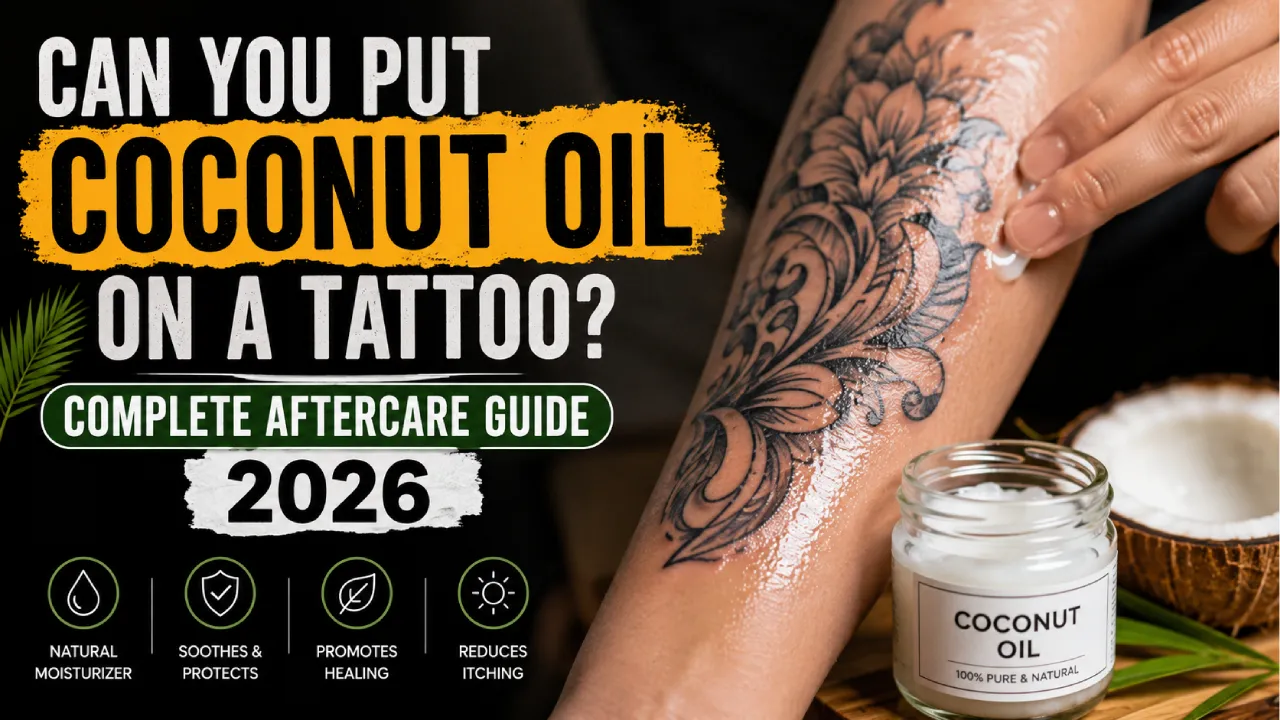
Can I use coconut oil instead of Vaseline on my tattoo?
Yes — pure unrefined coconut oil is a much better option. It is light, has natural antimicrobial properties, and absorbs into the skin. Do a patch test first as some people are allergic.
What is the best tattoo aftercare lotion available in Pakistan?
Bepanthen Ointment (available at most pharmacies) is widely recommended. Palmer’s cocoa butter lotion is also popular. For premium options, Hustle Butter and Tattoo Goo can be ordered via Daraz imports.
How do I know if my tattoo is infected?
Signs include intense spreading redness, worsening swelling after day 3, hot skin, yellow or green discharge, bad smell, fever, or red streaks. See a doctor immediately if you notice any of these.
How often should I moisturize my new tattoo?
2 to 3 times per day for the first two weeks — morning, afternoon, and before bed. Use only a thin layer each time. Over-moisturizing is just as harmful as under-moisturizing.
Disclaimer: This article is for informational purposes only and does not constitute medical advice. Always consult a qualified dermatologist or your tattoo artist for personalized guidance.