July 12, 2026

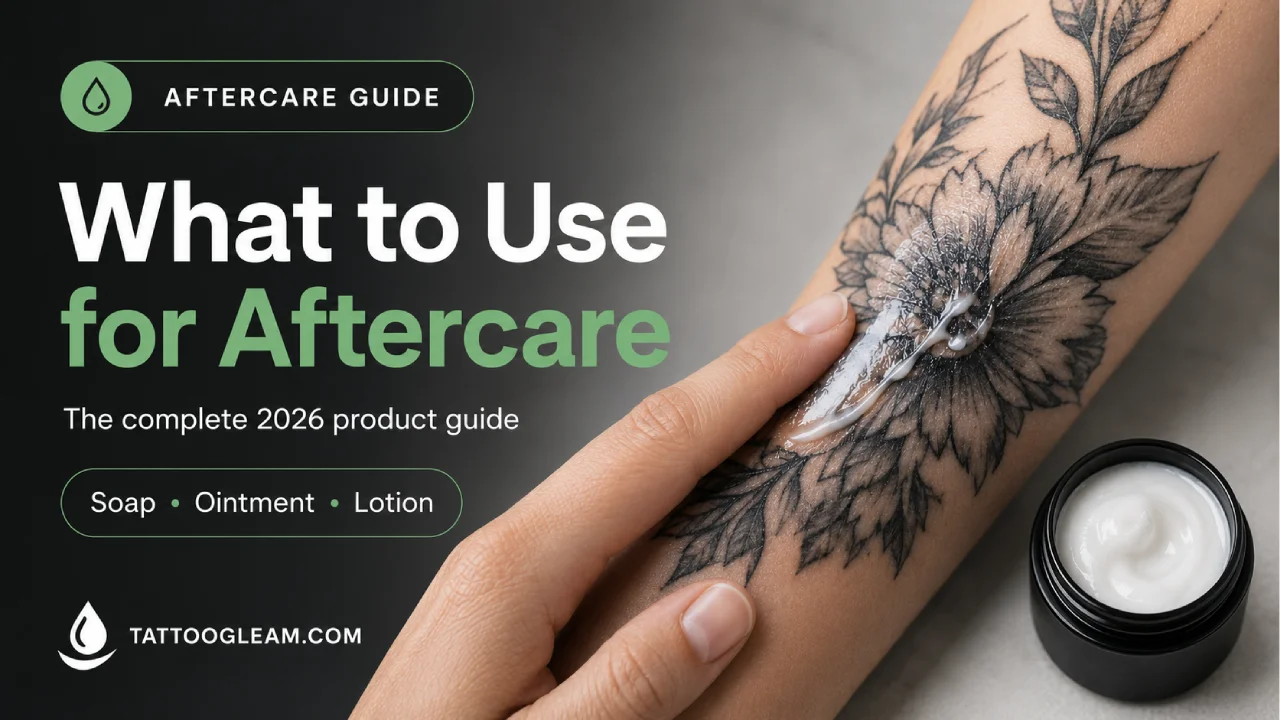
You walked out of the studio with fresh ink and a stack of conflicting advice. Vaseline or no Vaseline. Soap or no soap. Sunscreen or no sunscreen. Here is the complete, dermatologist backed answer to exactly what to use for tattoo aftercare, stage by stage, from the moment you leave the chair to full healing.
A tattoo is, medically speaking, a controlled wound. Your artist used a needle to puncture the skin thousands of times per minute, depositing ink into the dermis layer beneath the surface. NBC News spoke with tattoo experts who confirmed that proper aftercare not only prevents infection but also maximizes a tattoo’s vibrancy and longevity. The products you choose directly determine whether your tattoo heals crisp and vivid or ends up patchy, faded, and prone to touch-ups.
If you are new to tattoo care entirely, our Tattoo Gleam home page has a full library of aftercare guides covering every stage of healing. This article focuses specifically on the products: what to use, when to use it, and why.
Your tattoo is an open wound during this window. It will weep plasma, a small amount of blood, and excess ink. Your job is simple: keep it clean and protected without suffocating it.
Use a mild, fragrance-free antibacterial soap. Clean with your fingertips only, never a washcloth or loofah, twice daily.
Apply a very thin layer of Aquaphor Healing Ointment after each wash. Two dermatologists interviewed by NBC News, Dr. Hadley King and Dr. Joel Schlessinger, both recommend Aquaphor specifically because it creates a protective healing barrier while still allowing oxygen to pass through. This is the opposite of how pure Vaseline behaves, which fully seals the skin and can trap bacteria.
The tattoo begins to flake and peel like a mild sunburn. This is normal and expected. Switch from heavy ointment to a lighter, fragrance-free lotion during this stage.
Lubriderm Daily Moisture Lotion (unscented) and similar fragrance-free lotions are widely recommended at this stage because they absorb quickly without leaving a heavy residue that traps moisture against the skin. For a full ranked breakdown of the best options available in the US and UK, see our guide to the best lotion for tattoo healing.
Many professional artists recommend natural, tattoo specific balms during this phase. Hustle Butter Deluxe, made from shea butter, mango butter, and aloe vera, is consistently rated as one of the most trusted options by professional tattoo artists for its ability to deeply moisturize without petroleum derivatives.
The outer layer of skin has healed but the deeper dermis is still recovering. Continue moisturizing once or twice daily. This is the point where sunscreen becomes appropriate, but only after the surface has fully closed.
Once your tattoo has fully healed, apply a broad spectrum, mineral based SPF 50 sunscreen whenever it will be exposed to sunlight. UV rays are the leading cause of long term tattoo fading. For a full breakdown of how summer heat and sun affect healing, see our guide on tattoo aftercare in summer and hot weather.
Many studios now apply a clear adhesive bandage, commonly known as Saniderm or second skin, directly after tattooing. This modern approach has become standard at many studios because it significantly reduces scabbing and is associated with better color retention. Timing the removal correctly matters just as much as choosing the right lotion afterward, so always follow your artist’s specific instructions for how long to leave it on.
Search interest in natural aftercare alternatives has grown significantly, and for good reason. Many people prefer to avoid synthetic ingredients where possible. The honest answer is that some natural products work well during specific healing stages, while others are better suited for fully healed tattoos rather than fresh ones.
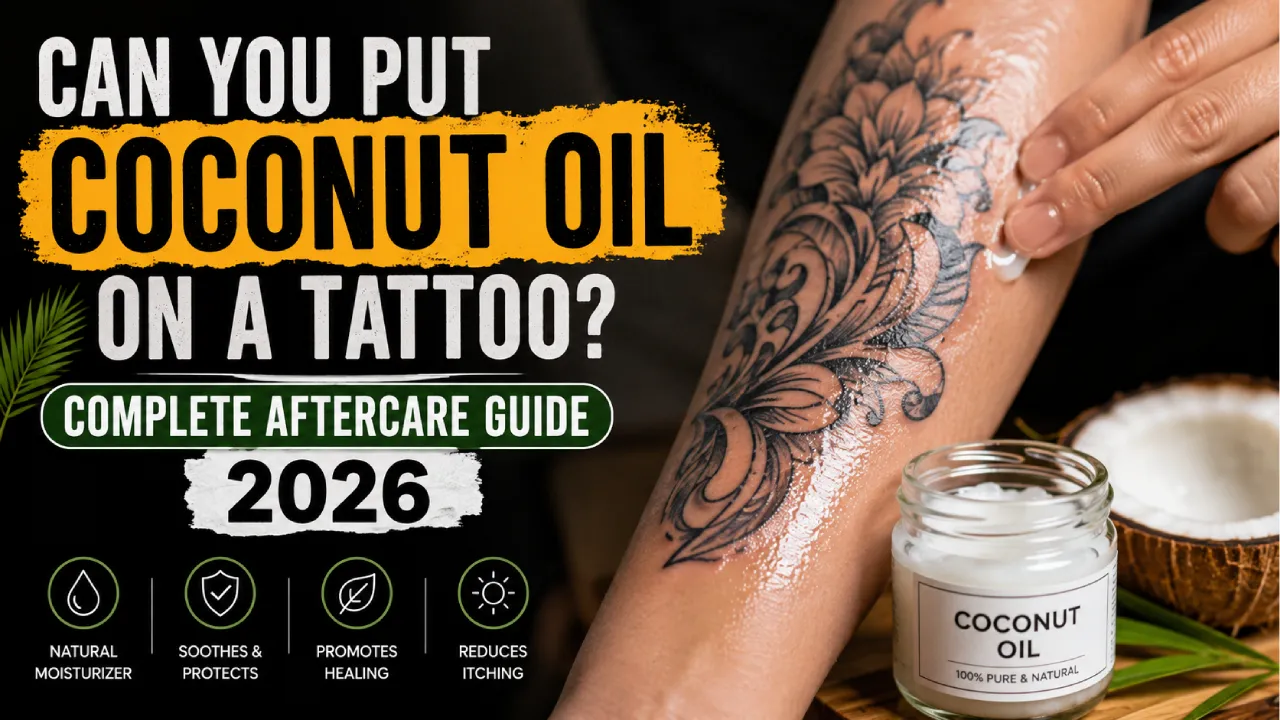
Coconut oil has natural antimicrobial properties and can be a reasonable option in small amounts, though it is not as effective as purpose formulated products and carries a small allergy risk for some people. Aloe vera is another commonly asked about option, particularly for its cooling and soothing properties, and can be useful on irritated or sun affected skin once a tattoo has fully healed. Both are worth a closer look in their own dedicated articles, which we will be publishing soon on TattooGleam.
Surface healing typically takes around four weeks, though the deeper layers of skin continue repairing for up to six months. The American Academy of Dermatology notes that how you treat your skin in the early weeks after a tattoo directly affects long term healing quality. Pregnant or breastfeeding readers planning a tattoo in the future should also read our guide on getting a tattoo while pregnant or breastfeeding before booking an appointment.
What is the single best product for tattoo aftercare?
There is no single universal answer because different products suit different healing stages. Aquaphor Healing Ointment is best for the first three to five days, while a lightweight fragrance-free lotion such as Lubriderm or a natural balm such as Hustle Butter Deluxe works best from day four onward through full healing.
Can I use regular body lotion for tattoo aftercare?
Yes, as long as it is fragrance-free, alcohol-free, and gentle. Many dermatologists recommend simple drugstore options like unscented Lubriderm or Aveeno over expensive specialty products, since the active healing ingredients are often very similar.
How soon after getting tattooed should I start using aftercare products?
Begin washing and moisturizing as soon as you remove the initial bandage, which is typically within two to four hours for standard wraps or three to five days if your artist used a Saniderm style second skin bandage.
Is it bad to use too much aftercare product?
Yes. Over-moisturizing is a common mistake. Applying too much product can suffocate the skin, trap excess moisture underneath, and actually slow the healing process. A thin layer, applied two to three times daily, is the correct approach.
Disclaimer: This article is for informational purposes only and does not constitute medical advice. Always follow your tattoo artist’s specific aftercare instructions and consult a dermatologist if you experience signs of infection or allergic reaction.
TattooGleam Editorial Team
Tattoo aftercare experts · tattoogleam.com